

Living With the Challenges of Idiopathic Hypersomnia?

Discover a New Path to Wellness Through Idiopathic Hypersomnia Clinical Trials

Idiopathic hypersomnia (IH) is a chronic neurological sleep disorder characterized by excessive daytime sleepiness (EDS) despite adequate or prolonged nighttime sleep. People with IH may experience severe sleep inertia (difficulty waking up), mental fog, reduced concentration, prolonged sleep duration, and persistent fatigue. These symptoms often interfere with work, school, and daily functioning, making idiopathic hypersomnia management an ongoing challenge for many patients.

Revive Research Institute is conducting IH clinical trials evaluating an investigational treatment option, which aims to reduce excessive sleepiness, improve wakefulness, and enhance overall quality of life for individuals living with idiopathic hypersomnia. These idiopathic hypersomnia clinical trials also support those seeking updated idiopathic hypersomnia treatment options through research.

To be eligible for idiopathic hypersomnia clinical trials, participants must:

  • Be 18 years of age or older.
  • Have a documented diagnosis of idiopathic hypersomnia (IH)

*Additional eligibility criteria may apply.

*Participation in idiopathic hypersomnia clinical trials may provide access to expert medical care, regular health monitoring, and investigational therapies at no cost. Health insurance is not required to take part in these studies, and joining an idiopathic hypersomnia research study may help advance future therapies.

This field is for validation purposes and should be left unchanged.
Who is this information for?*(Required)

Please provide YOUR contact information only.

Name(Required)
Best Time to Call(Required)
User Agreement(Required)
For more info, please visit Privacy Policy.
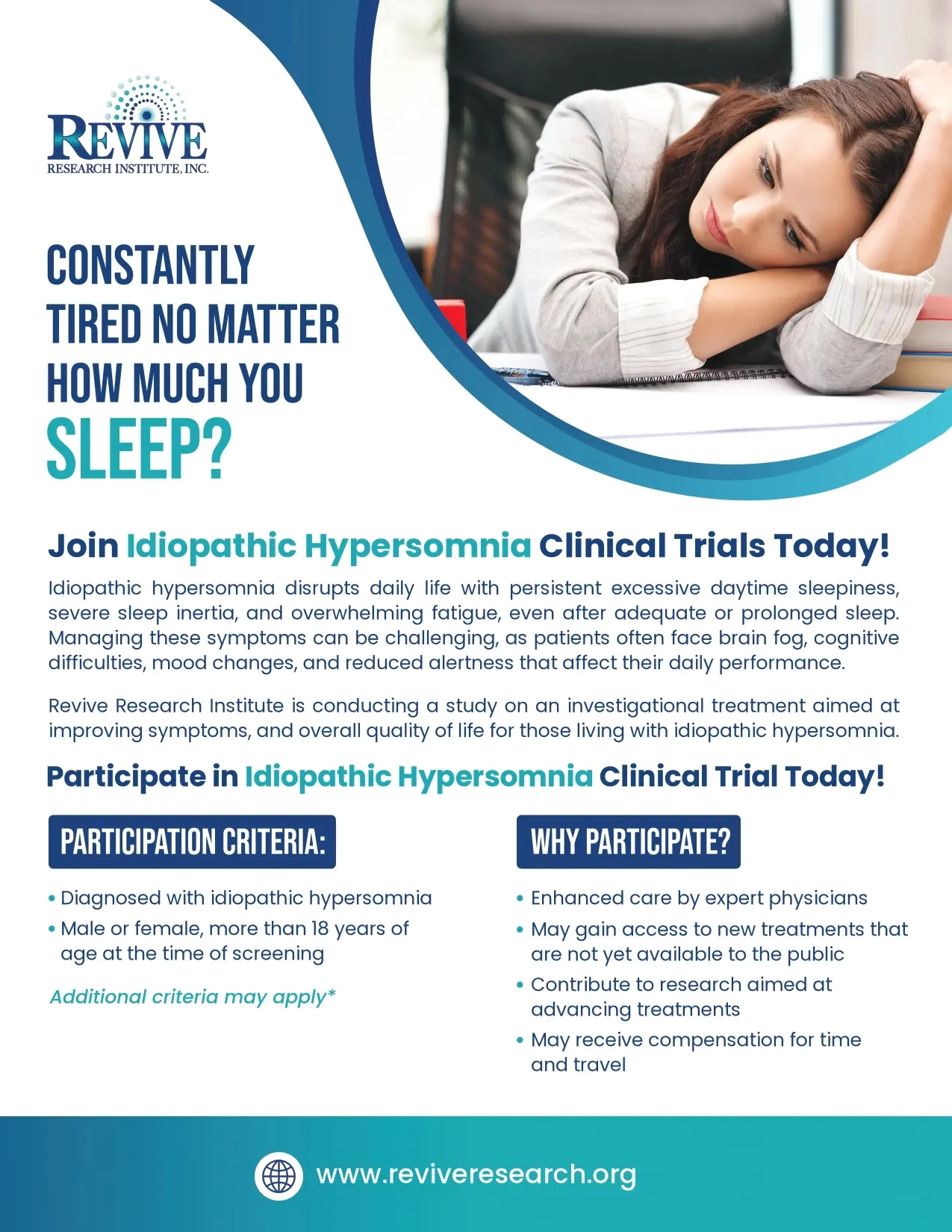
Idiopathic Hypersomnia Clinical Trials Flyer

Get Started: What to Expect

If you qualify for the idiopathic hypersomnia clinical trial in Michigan, you may have access to promising potential treatment options designed to manage symptoms more effectively through investigational treatment for idiopathic hypersomnia.

After submitting your information, our research team will contact you for a short pre-screening call. If you meet initial requirements, you will be invited to our research site for a screening visit, where we will review your medical history, perform physical exams, and run lab tests.

Those who qualify will review and sign an informed consent form (ICF), explaining study procedures, potential risks, and benefits. Once enrolled, you will receive investigational treatment and ongoing care from our dedicated research staff.

Our team ensures every participant understands their role and feels supported throughout the study. By participating, you help advance treatment options that could benefit future patients through idiopathic hypersomnia research study efforts.

Get Started: What to Expect

If you qualify for the narcolepsy clinical trial in Michigan, you may have access to promising potential treatment options designed to manage symptoms more effectively through investigational treatment for narcolepsy.

After submitting your information, our research team will contact you for a short pre-screening call. If you meet initial requirements, you will be invited to our research site for a screening visit, where we will review your medical history, perform physical exams, and run lab tests.

Those who qualify will review and sign an informed consent form (ICF), explaining study procedures, potential risks, and benefits. Once enrolled, you will receive investigational treatment and ongoing care from our dedicated research staff.

Our team ensures every participant understands their role and feels supported throughout the study. By participating, you help advance treatment options that could benefit future patients through narcolepsy research study efforts.

Age

18 years or older

Cobdition

Idiopathic Hypersomnia (IH)

Location

Michigan

Understanding Idiopathic Hypersomnia

Idiopathic Hypersomnia Clinical Trials
Common Symptoms:

  • Excessive daytime sleepiness
  • Severe sleep inertia
  • Difficulty waking up
  • Long sleep duration
  • Mental fog / poor concentration
  • Persistent fatigue

Common Risk Factors:

  • Neurological dysfunction
  • Genetic predisposition
  • Unknown underlying cause (idiopathic)

IH currently has no cure, making research essential for improving symptom management and quality of life. Many individuals join idiopathic hypersomnia clinical trials to explore whether new therapies can support better daily functioning.

Frequently Asked Questions (FAQs)

Idiopathic hypersomnia is a chronic neurological sleep disorder causing excessive daytime sleepiness, long sleep times, and severe difficulty waking up. The condition has no known cause.

Symptoms such as persistent sleepiness and cognitive impairment can severely affect daily functioning, and current treatments may not work well for everyone, which is why idiopathic hypersomnia treatment options continue to evolve through research.

Treatments often include medications, behavioral strategies, and sleep hygiene methods. However, these options may not fully relieve symptoms, prompting interest in investigational treatment for idiopathic hypersomnia.

By joining a clinical study for idiopathic hypersomnia, you can access investigational therapies at no cost, receive specialized care, and contribute to developing new idiopathic hypersomnia treatment options that may help improve outcomes for future patients.